How DeFi Lost $200M This Week [Explained]
By Lantern Finance
Hey Lantern Community,
DeFi took a beating this week.
On November 3rd, 2025, two major exploits totaling over $200 million in losses, cascading liquidations across multiple protocols, and a stark reminder that "decentralized" doesn't always mean "safe." Today, we’ll explore what happened.
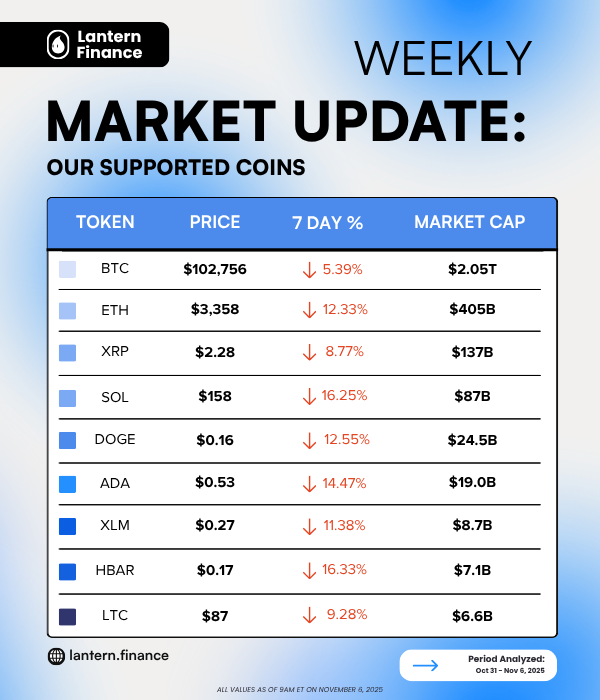
But first, market update!
The Balancer exploit
Around 12:45 PM UTC on November 3rd, attackers exploited a vulnerability in Balancer V2's smart contracts.
The technical details involve something called the "manageUserBalance" function—essentially a backdoor in the code that allowed unauthorized withdrawals and swaps. Using flash loans and sophisticated manipulation tactics, the attackers drained between $116 million and $128 million across multiple blockchains.
Ethereum, Arbitrum, Base, Sonic, Optimism, Polygon all hit simultaneously.
The attack targeted liquidity pools containing WETH, osETH, wstETH, and stablecoins like USDC. Because these pools are interconnected across the DeFi ecosystem, the damage spread like a financial contagion.
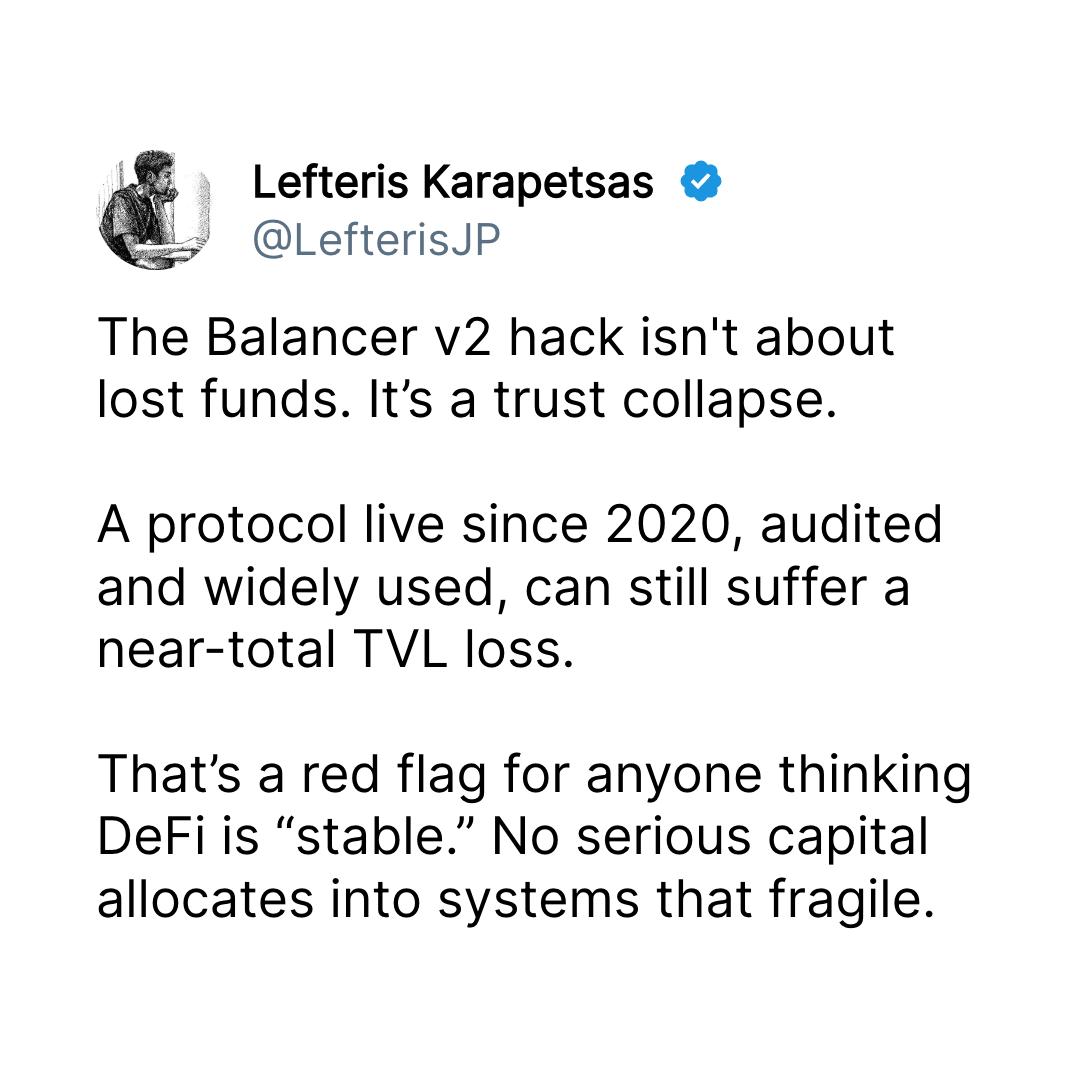
https://x.com/lefterisjp/status/1985300015548428789
The domino effect: Stream Finance lost $93M
Here's where it gets worse.
Stream Finance, a DeFi protocol that runs yield-generation strategies, had significant exposure to Balancer pools through an external fund manager. When Balancer was exploited, Stream's xUSD stablecoin—which was supposed to maintain a $1 peg—crashed from approximately $1.26 to as low as $0.43 by evening.
That's a 58% drop in hours, with the price stabilizing around $0.46-$0.55 by November 4th.
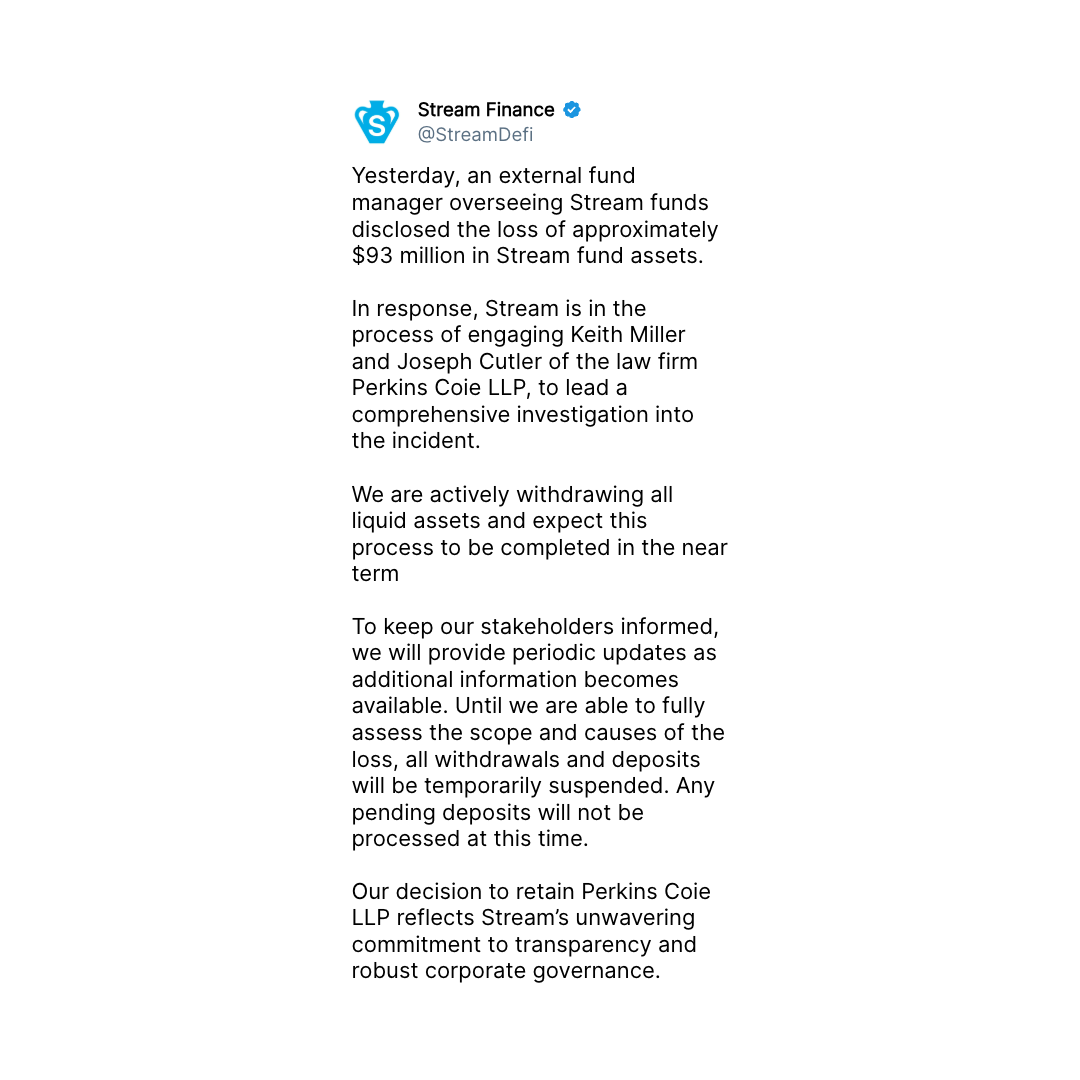
The protocol disclosed a $93 million loss attributed to the external fund manager's exposure to both the Balancer exploit and related market-making disruptions, paused all deposits and withdrawals, and hired law firm Perkins Coie to investigate.
But by then, the damage was done. Users couldn't access their funds. Panic selling amplified the depeg. Trust evaporated.
https://x.com/StreamDefi/status/1985556360507822093
The cascade effect
The Balancer exploit didn't just hit Stream Finance.
Elixir's deUSD stablecoin had $68 million in xUSD exposure. Morpho and Euler vaults suffered indirect losses. VarlamoreUSD on Sonic had 100% allocation to xUSD—completely wiping out users who thought they were diversified.
By November 4th, the Balancer exploit and Stream Finance collapse resulted in direct losses exceeding $200 million when accounting for the initial hack, liquidations, depegs, and contagion effects across interconnected protocols.
This brings total DeFi hacks in 2025 to over $3 billion—making it one of the worst years on record for DeFi.
What this reveals about DeFi risk
Here's what should terrify you: Balancer had been around for five years.
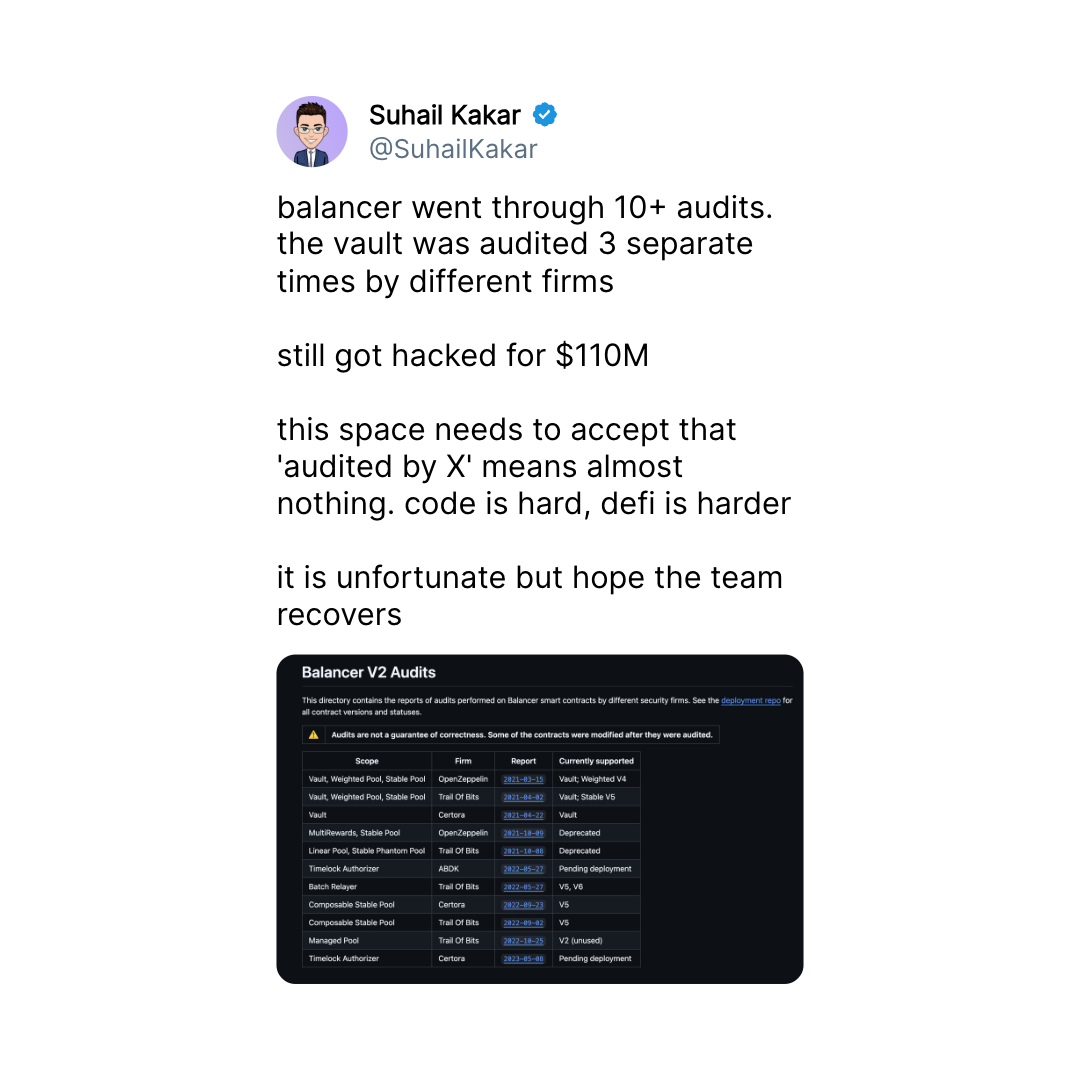
It had been audited by several of the world's leading security firms. It managed over $700 million in TVL. It was considered infrastructure—the kind of protocol that other protocols built on top of.
And it still got exploited for the third time.
If code that is mature, that has been audited, that is battle-tested, can be hacked, what does that say about DeFi risk today?
The promise of DeFi is beautiful: no middlemen, transparent smart contracts, democratized finance. But the reality is more complicated. Smart contracts can have bugs that auditors miss. External dependencies create hidden vulnerabilities. High leverage amplifies both gains and catastrophic losses.
And when things go wrong, there's no customer support line to call—just an immutable contract executing exactly as coded.
Stream Finance users discovered this the hard way. Their funds were stuck. No timeline for recovery. No clear path to making them whole. Just Discord messages, X posts, and hope.
https://x.com/suhailkakar/status/1985331523646615664?s=46
The question every crypto holder should ask
Are you willing to put your hard-earned capital at risk to borrow at slightly cheaper rates or earn a little extra yield?
In traditional finance, we call that "picking up pennies in front of a steamroller." You miss the big risk for a small short-term gain.
This is especially critical if you have significant capital at stake. The math is brutal: a 3% savings on borrowing costs means nothing if you lose 58% of your collateral value in a single afternoon.
The uncomfortable truth: there's nothing safer than cold storage custody. Not recursive looping. Not yield optimization. Not "battle-tested" smart contracts. Not yet, at least.
Just cold storage. That's it.
How platforms like Lantern are different
This is why we built Lantern differently.
We're not trying to chase the highest possible yields or offer the most aggressive leverage. We're building sustainable infrastructure that prioritizes your protection over short-term APY numbers.
Here's what that looks like:
72-hour margin call window: Unlike DeFi protocols that liquidate immediately when thresholds are breached, we give you three days to add collateral or adjust your position.
Zero liquidation fees: We make $0 from liquidating your position. Our revenue comes entirely from you successfully paying interest. We prosper when you prosper.
Qualified custodian: Your crypto sits with BitGo—a regulated, insured custodian that maintains 1:1 holdings. We never deploy them into risky yield strategies or allow assets to sit in smart contracts.
Human support: When volatility hits, you're not at the mercy of immutable code. Our team works with you to protect your position.
US-based and regulated: As a Delaware C corporation operating under US law, we're subject to regulatory oversight that protects you.
The lesson here isn't "DeFi is bad"
DeFi will continue to innovate and evolve. But the Stream Finance collapse and Balancer exploit prove something we've been saying from day one:
High yields without corresponding risk management are just expensive bets.
The clients who fare best in this market are the ones who understand that preservation of capital matters more than optimization of returns.
They're borrowing at sustainable LTV ratios. They're keeping cash reserves for volatility. They're working with platforms that have their back when markets turn.
Questions about how we structure our loans differently?
Text us: (415) 365-0100 or run your numbers: https://lantern.finance/borrow
Stay safe,
The Lantern Team
This newsletter is for educational purposes only and does not constitute financial advice. Always consult with your financial advisor before making lending decisions.