Changes To Our Margin Call And Liquidation Policy
We're making important changes to how margin calls work at Lantern. Here's what's changing and why it matters for your loan.
By Lantern Finance
We're making important changes to how margin calls work at Lantern. Here's what's changing and why it matters for your loan.
What's Changing (December 2025 Update)
1. 72-Hour Grace Period
Previous policy: 3 business days after a margin call
New policy: 72 hours after the margin call triggers
Important note: If you took out your loan before December 2025, we'll honor the original 3-business-day policy for your existing loan.
2. Continuous Margin Call Alerts (No More Confusion)
The old problem:
You'd receive a margin call alert when your LTV hits 65%. But if your LTV dropped to 63% the next day, you wouldn't get another alert. This created confusion:
Is my grace period still counting down?
How much time do I have left?
Am I still in margin call territory?
The new system:
Initial trigger: Margin call activates when LTV reaches 65%
Ongoing alerts: You'll receive daily email alerts as long as your LTV stays above 60%
Grace period countdown: The 72-hour clock continues as long as LTV remains above 60%
Auto-reset: If your LTV stays below 60% for 24 hours, your margin call clears and your grace period resets completely
Example scenario:
Day 1, 2:00 PM: Your LTV hits 65.5% → Margin call triggers, 72-hour countdown begins
Day 2, 10:00 AM: Your LTV is 63% → You still receive an alert, countdown continues
Day 2, 4:00 PM: Your LTV drops to 58% → Alerts pause, but the countdown is still active
Day 3, 4:00 PM: Your LTV has been below 60% for 24 hours → Margin call cleared, grace period resets
Day 4: Your LTV climbs back to 66% → New margin call triggers with fresh 72-hour window
3. No Changes to Liquidation Threshold
Liquidation still occurs at 75% LTV after the 72-hour grace period expires.
This hasn't changed. What has changed is the clarity around how you get there and the amount of warning you receive along the way.
Why We're Making These Changes
Clear Timelines
The previous "3 business days" system created ambiguity. Borrowers couldn't easily calculate exactly when their grace period would expire (especially during the holiday season)
With a 72-hour countdown, you know exactly where you stand at all times.
Reduced Alert Fatigue Without Sacrificing Safety
The old system had two problems:
Too many alerts:
If your LTV hovered around 65%, you'd get daily warnings even when you weren't in immediate danger
Not enough information:
If your LTV dropped slightly, alerts stopped, but the grace period kept counting down
The new 60-65% alert zone solves both issues. You get consistent warnings when you're in margin call territory, but not when you've created a sufficient buffer.
What This Means for Your Strategy
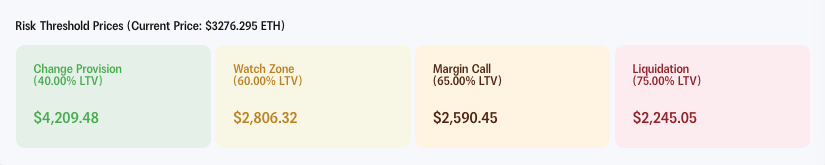
The 60-65% Zone is Your Safety Buffer
Think of 60-65% LTV as your "watch" zone:
Below 60%: Green light, plenty of cushion
60-65%: Yellow light, stay alert, but you have time
Above 65%: Red light, 72-hour countdown active
If you keep your LTV below 60%, you'll not worry about margin calls.
Communication is Critical
We can work with borrowers who communicate with us during their grace period. We've helped many borrowers avoid liquidation by:
Structuring partial repayments
Arranging collateral additions
Finding solutions to preserve positions
However, we can only help if you reach out to us and communicate with us.
After the 72-hour grace period expires with no communication, our flexibility becomes extremely limited. The loan enters automated liquidation protocols.
Monitor Your Position Proactively
Don't wait for margin call alerts. Check your dashboard regularly, especially during volatile market periods.
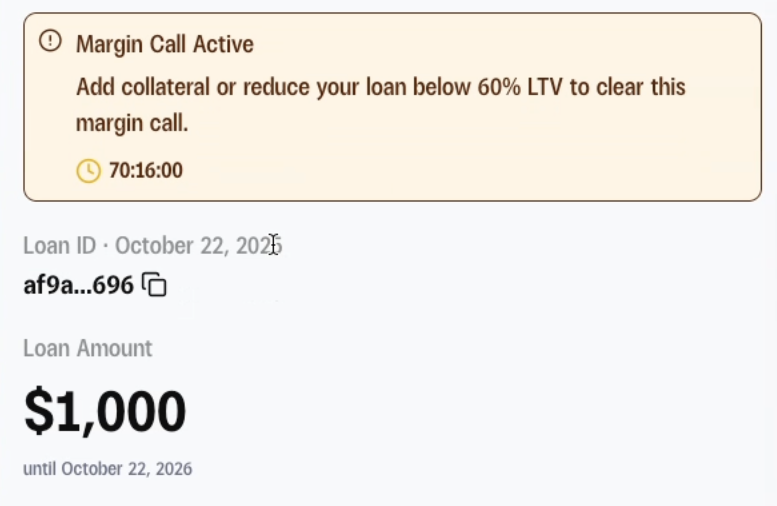
New Feature: We've added a countdown timer to your dashboard. Once a margin call triggers, you'll see exactly how much time remains in your grace period. This timer will appear both on your main dashboard and within each loan's management page.
Dashboard

Loan Management Page
How Lantern's Approach Still Differs from Competitors
Even with these updates, our margin call policy remains significantly more borrower-friendly than the industry standard:
Industry Standard:
Auto-liquidation at threshold
No grace period
No human oversight
Liquidation fees (1-5%)
Lantern:
72-hour grace period
Continuous clear alerts
Team available to help
Zero liquidation fees
We built these protections into our platform specifically because we remember what happened during the flash crash of October 10, 2025.
While other platforms liquidated billions in positions, every single Lantern borrower kept their crypto because they had time to respond.
Action Items for Current Borrowers
1. Review Your Current LTV
Log in to your dashboard and check where your positions stand today. Are you comfortable with your current buffer?
2. Set Your Own Internal Alerts
Consider 60% LTV as your personal warning threshold. If you approach it, do consider taking action before margin calls trigger.
3. Save Our Contact Information
Call/Text: (415) 365-0100 Email: [email protected]
If you receive a margin call alert and foresee an issue with lowering your LTV, reach out as soon as possible.
4. Understand Your Numbers
For each loan, know:
Your current LTV ratio
How much the collateral price would need to drop to hit 65% (margin call)
How much would it need to drop to hit 75% (liquidation)
These numbers are available in your dashboard for every active loan.
Looking Ahead
This policy update is part of our ongoing commitment to transparency and borrower protection.
We continue to believe that crypto lending works best when platforms are aligned with borrower success, not borrower liquidation.
Questions?
This is an important update. If anything is unclear, please reach out:
Text us: (415) 365-0100
Email: [email protected]
Dashboard: lantern.finance/dashboard
Our team is here to ensure you understand exactly how these changes affect your specific situation.
The Lantern Team
This is for informational purposes only and does not constitute financial advice. All borrowers should review their loan agreements and understand their specific margin call and liquidation thresholds.