Bitcoin Just Had Its Worst Two Weeks Since 2022. Here's Where We Stand.
By Lantern Finance
Hey Lantern Community,
It's been a rough couple of weeks for crypto.
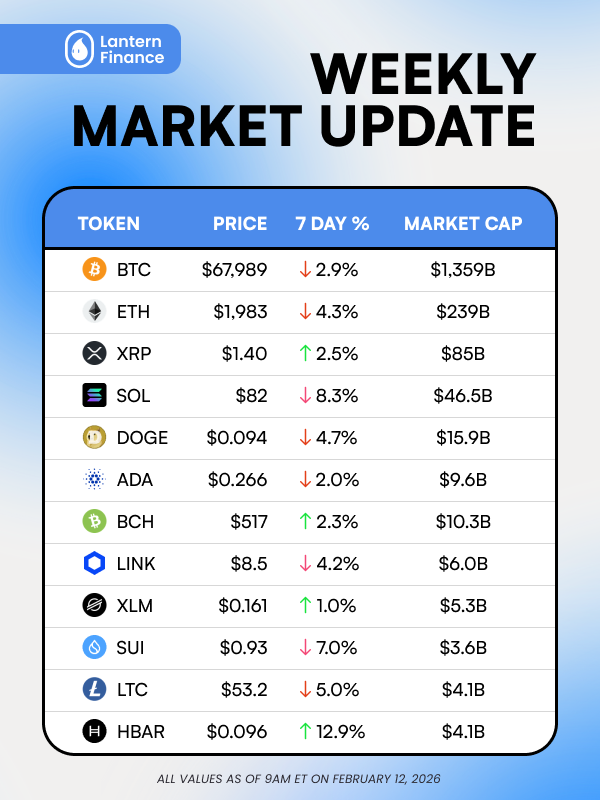
Bitcoin fell as much as 52% from its all-time high last Thursday. The total crypto market cap has shed roughly $2 trillion since the October 2025 peak.
The crypto fear and greed index hit 5 last week, which is the lowest reading ever recorded.
We know many of you are watching your portfolios closely. So let's talk about what happened, what it means, and how Lantern is handling it.
What happened
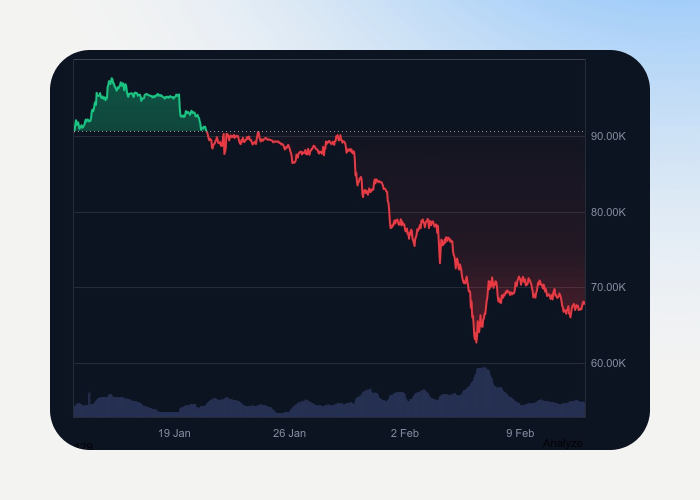
Bitcoin erased all of its post-election gains from 2024, falling 21% to around $60,000 as investors pulled back from risk assets. Over $5.7 billion has exited spot Bitcoin ETFs. BlackRock's IBIT fund alone has seen its assets cut nearly in half from its October peak.
This was a slow bleed that accelerated.
The November sell-off got dismissed as "just a dip." Then February confirmed it was something more. Bitcoin closed below its 100-week exponential moving average for the first time in two years.
Prices have since stabilized, but volatility is still elevated. This suggests that the market might still be finding a floor.
How Lantern handled it
Lantern had a small number of liquidations during this drawdown. A couple of borrowers hit their liquidation thresholds after the decline extended past what their collateral cushions could absorb.
That said, the vast majority of Lantern borrowers came through this with their positions intact.
Here's why.
Conservative LTV ratios gave borrowers room to breathe. Even with a 50%+ decline in Bitcoin, most of our borrowers weren't close to liquidation territory. Many borrowers were well under 50% LTV, which gave them even more cushion and time to respond.
72-hour grace periods meant no panic liquidations. For borrowers who did receive margin calls, they had an industry-leading amount of time to respond. Nobody was blindsided by an algorithm selling their crypto at the worst possible moment.
Zero liquidation fees. For the small number of borrowers who were liquidated, we didn't charge a single dollar in liquidation fees. We don't make money when you lose. Our revenue comes from interest payments on active loans, which means we're always incentivized to help you stay in your position.
Our team was on the phones. During the worst of it, we were talking to borrowers, walking them through their options, and helping them make informed decisions or working with them on different solutions. That's not something a smart contract can do!
How Lantern is improving:
We also found a number of areas for improvement and will be working on them over the coming weeks.
For instance, we are going to move to a new payment provider that will soon allow users to make principal payments from their Lantern accounts, rather than having to send wires from their banks.
We’re also working on the following features:
A text message alert systems for margin call warnings
More robust scenario analysis tools for users to determine how much collateral to add or loan to pay down
A revamped UI/UX for easier navigation
Faster withdrawal processing for white-listed addresses
Users will be able to easily see when their grace periods reset
We’ll be adding additional resources to our support staff in order to make sure every call/text, even during a stressful environment, is answered.
If you have other suggestions for how Lantern can improve, you can always let us know by replying to this email.
What borrowers should do right now
1. Check your LTV ratio
Log into your Lantern dashboard and see where you stand. If you're well under the margin call threshold, you have breathing room. If you're getting closer, it's better to plan now than react later.
2. Consider adding collateral or paying down your loan
If you have additional crypto sitting in an exchange, moving some into your Lantern account as reserve collateral gives you a buffer you can deploy with one click if markets drop further. Don’t wait to act till you’re already nearing liquidation levels.
3. Don't make emotional decisions
Every major correction in Bitcoin's history has felt like the end of the world while it was happening. That doesn't mean you should ignore risk but it does mean you shouldn't panic-sell your collateral at the bottom of a drawdown.
4. Talk to us.
If you're concerned about your position, text or call us. We'd rather hear from you now and help you plan than hear from you in a crisis.
Some context that matters
A few things are worth noting amid the fear:
Goldman Sachs just disclosed $2.36 billion in crypto exposure in its Q4 filing, including positions in Bitcoin, Ethereum, and XRP ETFs.
JPMorgan said Bitcoin's investment thesis is strengthening as its volatility continues to decline relative to gold.
The SEC and CFTC have unified under "Project Crypto" to build a single regulatory framework.
The institutions aren't leaving. The regulatory picture is getting clearer, not murkier. And Bitcoin has survived drawdowns like this multiple times before.
None of that guarantees a recovery timeline. But it does suggest that the long-term thesis for digital assets hasn't changed, even if the short-term price action is painful.
We're here
Market crashes are the moments that test what a platform is actually made of. It's easy to look good when everything is going up. What matters is how your lender behaves when things go down.
We're proud that the vast majority of our borrowers weathered this with their positions and their collateral intact.
If you're thinking about your position, your strategy, or just want to talk through the numbers, we're here.
Text us: (415) 365-0100
Stay steady,
The Lantern Team
This newsletter is for educational purposes only and does not constitute financial advice. Crypto markets are volatile and leveraged positions amplify both gains and losses. Always understand your risk before borrowing.