How did Blockfi go bankrupt?
Today, we will take a deep dive into one of the most critical events in crypto lending history - the collapse of BlockFi.
By Lantern Finance

Hey Lantern Community,
Today, we will take a deep dive into one of the most critical events in crypto lending history - the collapse of BlockFi.
Understanding what went wrong helps us make better decisions and shows why Lantern's approach to crypto lending is fundamentally different.
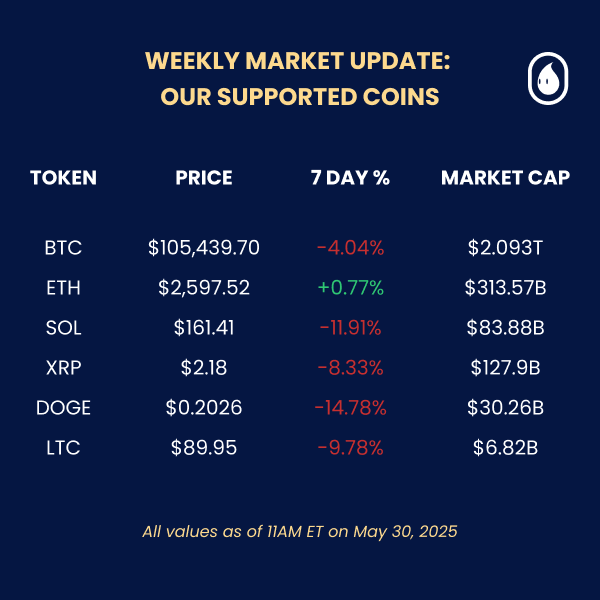
But first, market update!
How BlockFi Collapsed
1. Lending out Client Assets
BlockFi reused client collateral (Bitcoin and other assets) to fund its own lending and trading activities, effectively double dipping to make money on both the loans and the clients' collateral. This created a precarious fractional-reserve system where client collateral was lent out multiple times without adequate backing. When market volatility spiked, BlockFi faced insolvency risks as it couldn’t return deposits on demand.
2. Undercollateralized Institutional Loans
BlockFi claimed its institutional loans were “typically over-collateralized,” but 76–84% of loans between 2019–2021 were undercollateralized.
These loans exposed BlockFi to massive counterparty risk. For example, Three Arrows Capital (3AC) defaulted on $680 million in loans, which BlockFi couldn’t recover due to insufficient collateral.
3. Catastrophic GBTC Arbitrage Bets
BlockFi heavily invested in the Grayscale Bitcoin Trust (GBTC) arbitrage trade, which turned disastrous:
Mechanism: Deposit Bitcoin into GBTC, receive shares after the lockup period, then sell at what was historically a premium to net asset value.
Scale of Exposure: BlockFi held approximately 5.6% of all GBTC shares at its peak, representing massive concentration risk.
Failure: GBTC's premium flipped to a 34-35% discount by mid-2022 due to SEC ETF rejections, market fatigue, and broader crypto downturn. GBTC fell 64% year-to-date in 2022.
Impact: While specific GBTC losses aren't disclosed, BlockFi was forced to completely unwind all positions by July 2022, contributed to 20% staff cuts, and necessitated emergency capital from FTX ($400M credit line + $240M acquisition deal).
4. Interconnected Risks
Liquidity crunch: GBTC losses and 3AC’s default drained reserves, leaving BlockFi reliant on a $400M FTX credit line. When FTX collapsed, BlockFi lost access to this lifeline.
Regulatory blowback: A $100M SEC settlement in 2022 for offering unregistered securities further strained operations
How is Lantern Different?
1. US-Based, Regulatory Compliant
We're a Delaware C corporation headquartered in Nevada, following US laws and regulations as a Money Services Business (MSB) under FinCEN. Unlike offshore entities operating from the Cayman Islands or other jurisdictions, we're committed to regulatory compliance and transparency.
2. Conservative Lending Practices
During market downturns, our conservative approach provides significant protection and sustainability. We NEVER lend out borrower collateral nor do we gamble with them on speculative bets. Borrower collateral simply sits or is natively staked in insured cold storage with our qualified custodian, BitGo.
3. Rigorous Risk Management
Our risk management framework includes:
No lending out of borrower collateral or speculation under any circumstances
Careful asset-liability matching
Robust liquidation procedures with multiple safety mechanisms
Conservative collateral requirements on higher-risk assets
4. Qualified Custody Solutions
We use industry-leading qualified custody solutions rather than self-custody, providing an additional layer of regulatory and technical security for all assets.
5. Transparent Business Model
We're clear about how we generate yield and manage risk. Our business model doesn't rely on generating yield using client collateral or risky DeFi strategies.
Looking Forward
As we continue expanding our lending services to include more assets like Litecoin and XRP, we remain committed to the fundamentals that make Lantern different: transparency, robust risk management, and a customer-first approach.
Until then, if you have any questions or feedback, don't hesitate to reply to this email.
We read every single reply. Until next time,
The Lantern Team